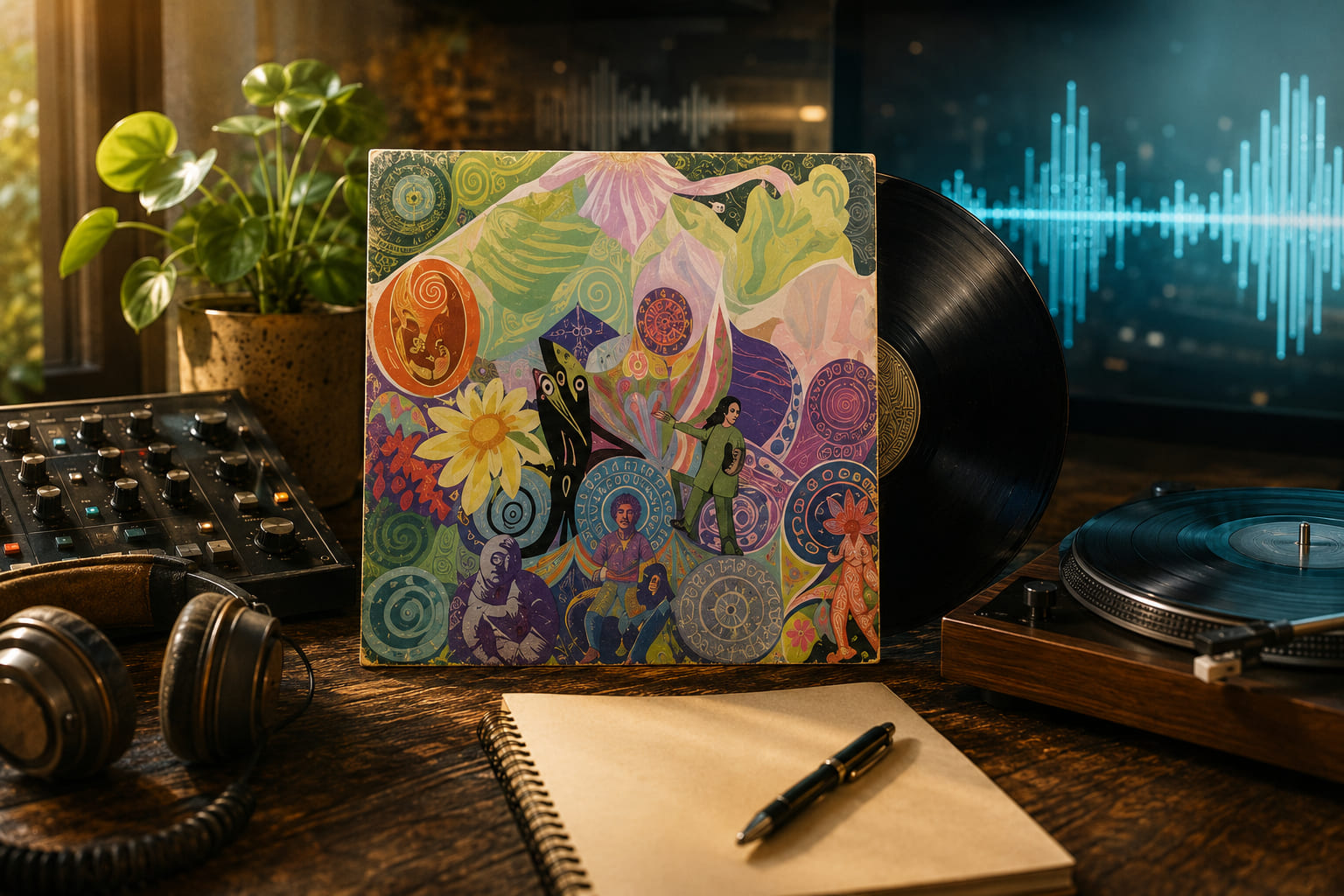
The Zombies recorded Odessey and Oracle in 1967, released it in 1968, and broke up before the album found its audience. That history can make the record seem like a preserved artifact. Listening closely gives the opposite impression. Its concise songs, emotional ambiguity, keyboard-led arrangements, and disciplined production still feel unusually direct.
The album is often labeled psychedelic or baroque pop, but neither term fully explains its endurance. Its strongest quality is proportion. Strange chords, Mellotron textures, close harmonies, and unusual subjects appear inside songs that rarely waste a measure.
The arrangements are detailed without becoming heavy
Many late-1960s psychedelic records expanded song length and studio scale. Odessey and Oracle usually works through compression. A piano figure, bass movement, vocal response, or Mellotron line may establish a complete atmosphere in seconds.
This economy resembles modern independent pop, where a distinctive texture often needs to arrive early. The difference is that the Zombies created most of their color through performance and arrangement rather than endless layers. Each part has a clear role.
Rod Argent and Chris White wrote from different angles
Keyboardist Rod Argent and bassist Chris White shared the songwriting, giving the album variety without breaking its identity. Argent often favors strong melodic architecture and keyboard movement. White’s songs can feel more narrative, psychologically unusual, or harmonically unsettled.
Because two writers contribute, the record avoids a single emotional posture. It can sound playful, romantic, anxious, observant, and resigned. Modern album-makers often seek this balance between consistency and variety; the Zombies achieved it through a shared instrumental and vocal language.
The vocals value unity over display
Colin Blunstone’s lead singing is controlled and intimate. He rarely forces emotion through volume. The backing vocals then widen specific words or cadences, creating lift without turning every chorus into a demonstration.
This approach feels current because many modern singers favor closeness and detail over theatrical projection. Yet the Zombies’ harmonies are carefully voiced, not merely stacked copies of one line. Listening to the inner parts reveals movement that supports the chord changes.
The rhythm section remains quietly inventive
The album’s reputation centers on keyboards and vocals, but bass and drums prevent the arrangements from becoming ornamental. Chris White’s bass often behaves melodically, while Hugh Grundy adjusts touch and pattern to the needs of each song.
“Care of Cell 44” moves with pop brightness. “Hung Up on a Dream” floats more freely. “Time of the Season” depends on space, repeated bass, handclaps, and a restrained groove. The band changes feel without losing precision.
It treats major emotions indirectly
Odessey and Oracle contains prison release, relationship breakdown, wartime separation, dreams, memory, and the passing of time. The lyrics rarely explain every feeling. They present scenes, voices, and small details that leave interpretation open.
That restraint helps the album avoid period-specific sentimentality. “This Will Be Our Year” is hopeful, but its tenderness comes from what seems to have been endured before the song begins. “Brief Candles” uses memory as both comfort and limitation. These emotional structures remain recognizable.
Abbey Road gave the band tools, not an identity
The Zombies recorded at EMI’s Abbey Road Studios after the Beatles had completed Sgt. Pepper’s Lonely Hearts Club Band. They used Mellotron and studio resources associated with the era, but the record does not sound like a copy of the Beatles. The group’s jazz-aware harmony, breathy lead vocal, and keyboard-centered writing remain distinct.
The Rock & Roll Hall of Fame’s Zombies history describes the making and delayed success of the album. Its unusual afterlife reinforces an important point: commercial timing and artistic durability are different things.
The stereo space feels purposeful
Some 1960s stereo mixes place instruments in positions that can seem extreme today. On Odessey and Oracle, separation often helps listeners inspect the arrangement. Voices, keyboard, bass, and percussion occupy recognizable areas, making the songs educational for anyone interested in production.
Try one listen on speakers and another on headphones. Follow a different element each time. The record becomes less like a soft psychedelic wash and more like a set of precisely interlocking decisions.
Five details to hear on your next play
- The piano’s rhythmic role in “Care of Cell 44.”
- The changing vocal density across “Maybe After He’s Gone.”
- The bass movement beneath the calm surface of “This Will Be Our Year.”
- The Mellotron atmosphere in “Hung Up on a Dream.”
- The use of silence and repetition in “Time of the Season.”
A bridge between several traditions
The album connects British beat music, jazz harmony, choral pop, psychedelia, and the chamber detail discussed in our sunshine pop versus baroque pop guide. It also points toward later chamber pop and indie artists who use keyboards and strings without abandoning concise songwriting.
For seasonal listening, it sits naturally beside the records in our autumn retro-pop guide. Its surface is colorful, but its deeper subject is transition.
Why it lasts
Odessey and Oracle sounds modern because it does not depend on spectacle. The songs establish distinct spaces quickly, trust the listener to understand incomplete emotions, and use arrangement as part of the writing.
The production carries the marks of 1967, but the decisions beneath it remain practical: leave room, make every part sing, and stop before the idea loses its force. Those lessons do not age.