Sunshine pop is one of those genre names that sounds simple until you try to define it. It usually points to bright vocal harmonies, clean melodies, soft rock arrangements, and a California feeling that became strongly associated with the mid and late 1960s. It is not the same as ordinary summer music. The best sunshine pop often mixes warmth with careful writing: stacked voices, gentle rhythm sections, orchestral details, and choruses that sound effortless even when the arrangement is complex.
The term itself became common later, not during the original 1960s peak. That matters because many of the artists now placed under the label did not call themselves sunshine pop at the time. They were often working between folk rock, soft pop, bubblegum, psychedelic pop, and studio-made vocal music. A good starting point is the broad background in Wikipedia's sunshine pop overview, which connects the label with acts such as the Beach Boys, the Mamas & the Papas, and the 5th Dimension.
The sound is easiest to recognize through its ingredients. First come the voices. Sunshine pop usually favors group singing over a single hard-edged lead vocal. Harmonies often move in close steps, giving the music a soft glow rather than a gospel or soul-style shout. Second comes the writing. The songs tend to be melodic and concise, but not plain. Many use unexpected chord changes, bass movement, or modulations that reward repeated listening.
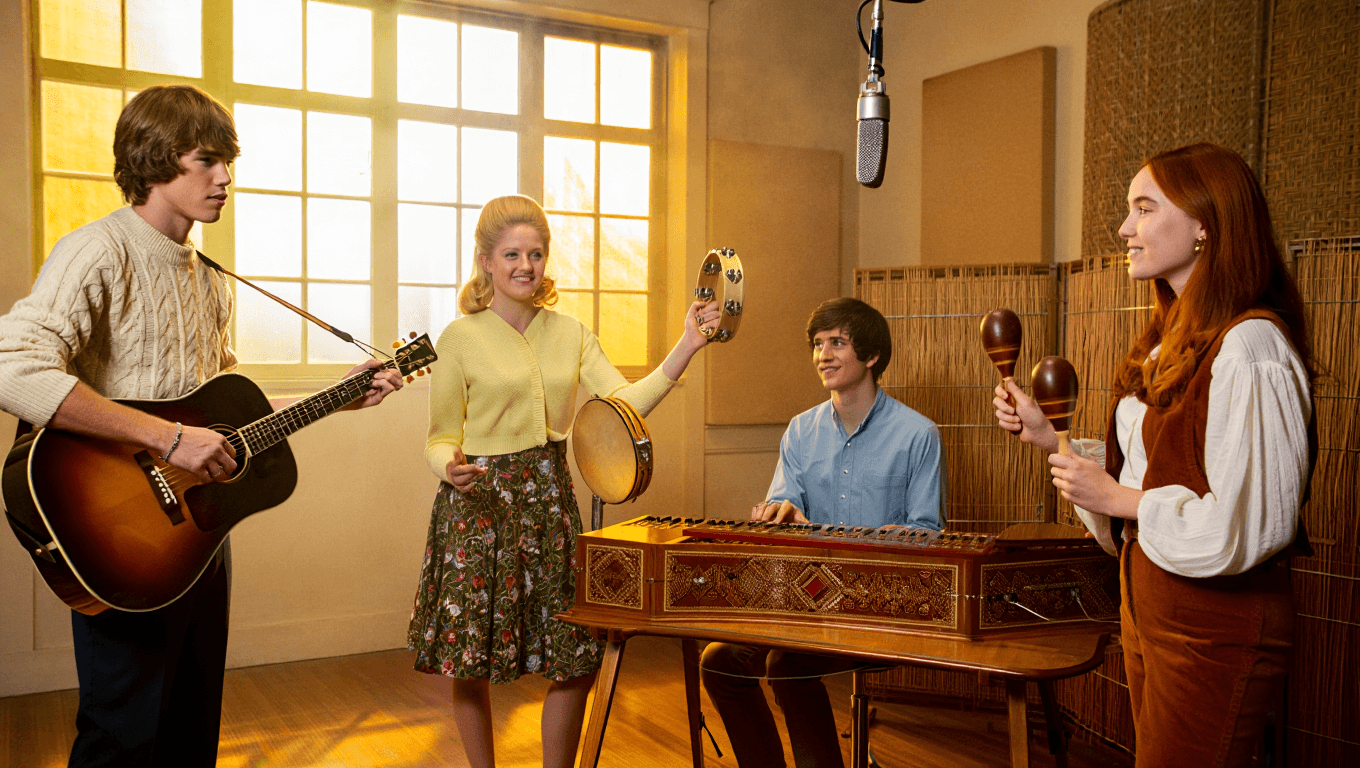
Third comes the studio. Sunshine pop is rarely raw garage music. Even when the songs are short, they often use careful production: hand percussion, strings, brass, harpsichord, vibraphone, acoustic guitar, or layered backing vocals. This is why the style sits close to baroque pop and orchestral pop, though it usually feels lighter and more open. The mood is not always happy, either. Some of the strongest sunshine pop songs carry sadness under a polished surface.
Season also affects how people hear the genre. A February post about sunshine pop may seem early for summer, but that is part of the appeal. This music works as a pre-spring reset: a way to hear color, space, and optimism without forcing party energy. For listeners who only know the Beach Boys' surf hits, sunshine pop opens a wider lane: the Mamas & the Papas' folk harmony, the Association's polished ensemble sound, the Free Design's jazz-tinted vocals, and later bands that studied those records closely.
For a modern blog like ExplorersClubMusic.com, sunshine pop is a useful foundation because it explains the site's wider direction. Retro-inspired pop is not only nostalgia. It is a songwriting language. The same tools still appear in modern indie pop, chamber pop, and harmony-heavy records: stacked vocals, clean guitar tones, elegant bridges, and arrangements that make small songs feel cinematic.
The best way to start listening is not to ask whether every song is officially sunshine pop. Ask what the recording is doing. Are the vocals arranged as a group instrument? Does the chorus feel open and melodic? Does the production use brightness without becoming thin? Does the song suggest summer while still carrying real craft? If the answer is yes, you are probably close to the heart of sunshine pop.
Sunshine pop rewards patient listening. Under the sweet surface, there is often a lot of design: disciplined parts, careful entrances, and melodies that feel simple only because the writers did the hard work. That is why the genre still matters. It gives modern listeners a route back to a period when pop records could be short, warm, and highly arranged at the same time.